
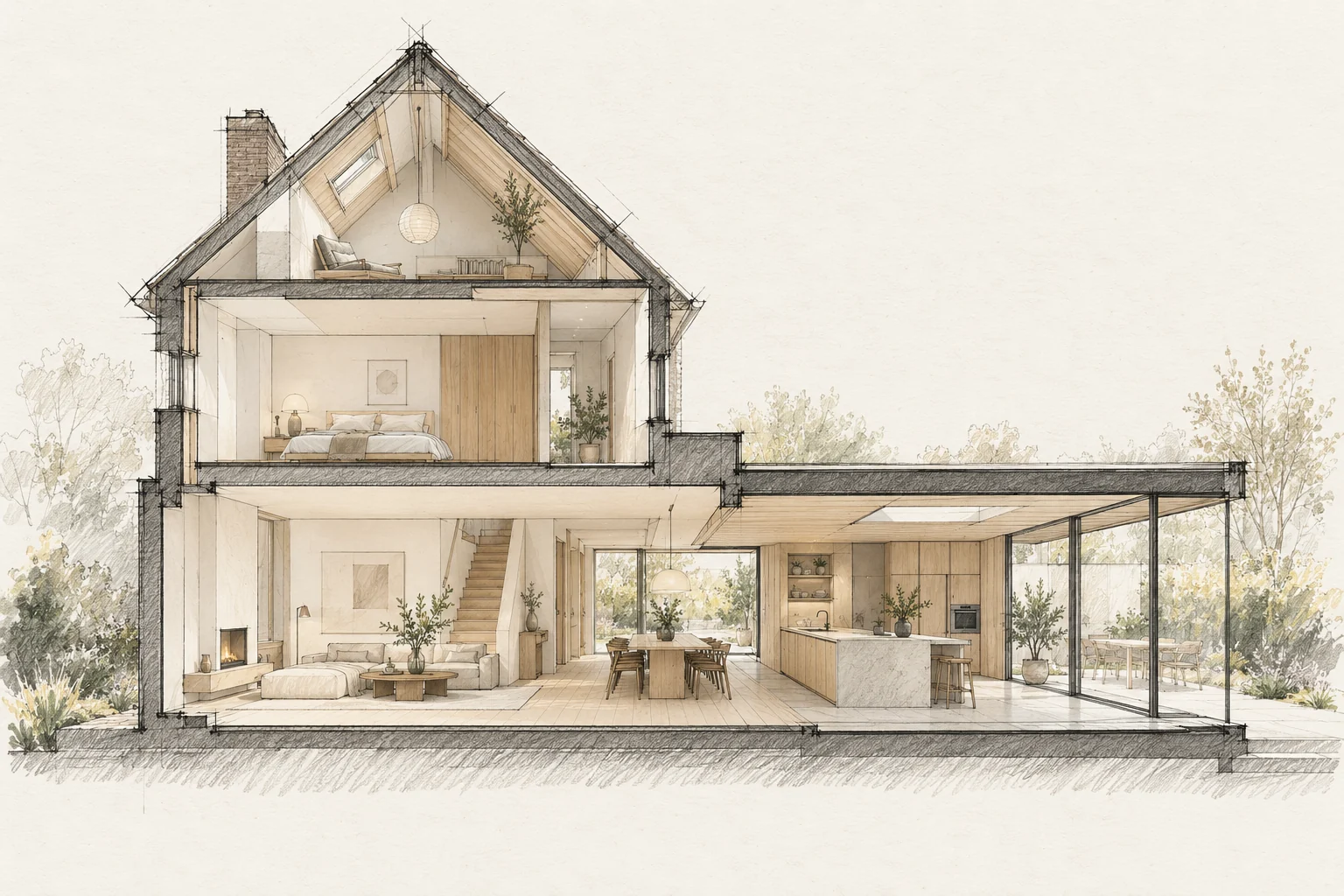
Material choice influences ageing, cleaning and junctions as well as first impressions.
Which trade-off matters?
More glazing does not automatically make a better room. Compare continuous glass with a combination of glazed and solid wall areas so views, furniture and shelter each have a place.
View real samples
A screen cannot reliably show colour and texture. View samples together in the home's light, including joints, edges and fittings.
Allow for later maintenance
Keep controls and glazing accessible with the final furniture arrangement. Store glazing and shading instructions together, including any restrictions on cleaning products.
What the drawing needs to explain
Draw sightlines from two seats and show shading positions. Review the same layout in daylight and with interior lights on; privacy works differently in those situations.
Questions for your own property
- Were samples viewed in real light?
- Does the material suit its use?
- Is the maintenance practical?
How can extensive glazing work with privacy?
Start from where you actually sit. Targeted window divisions, shelter or adjustable shading may help more than identical glazing everywhere. Assess the evening situation too.
Illustrative design situations, not evidence of completed work. Assess decisions against the actual property.