
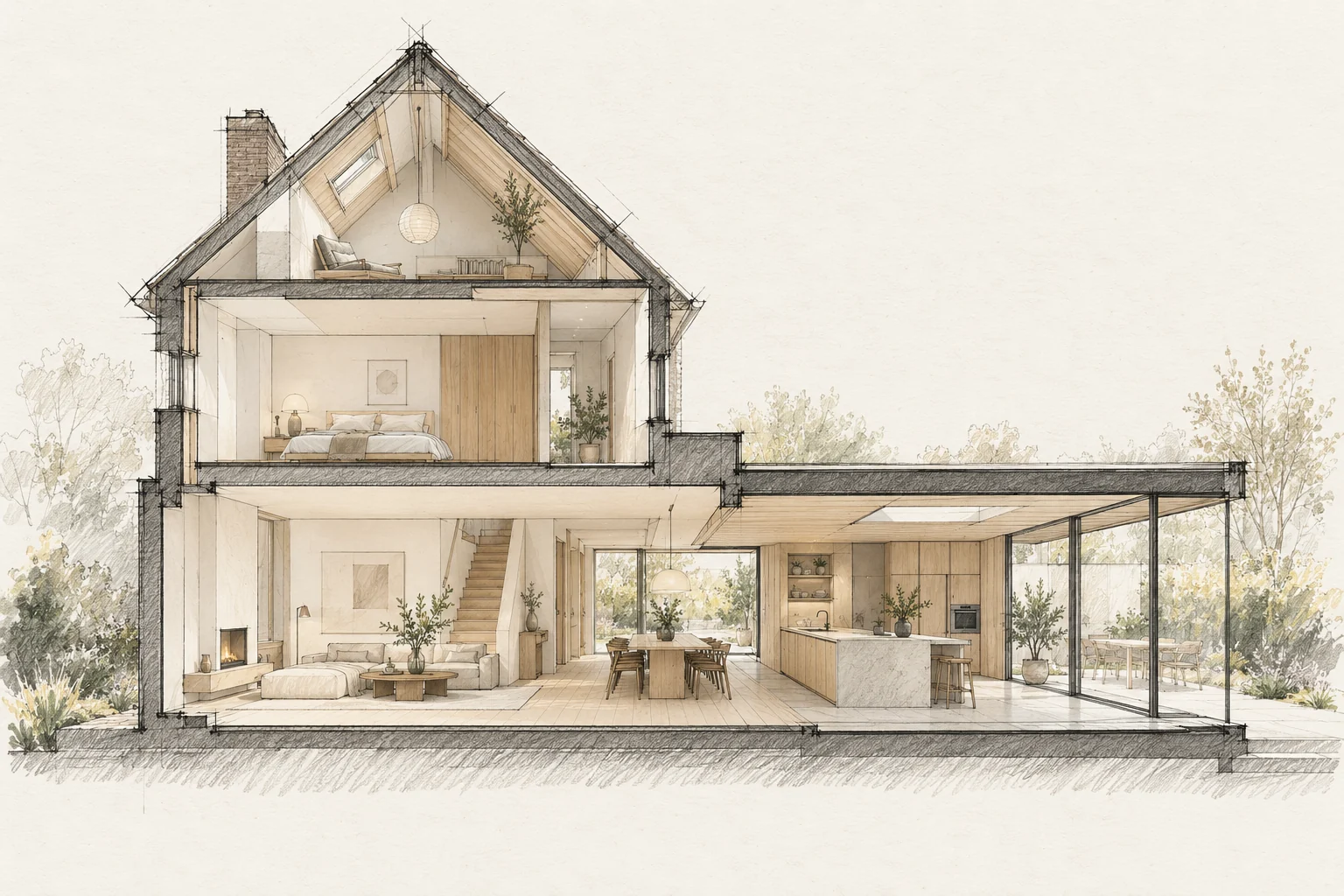
Large glazing does not automatically create a pleasantly light home. An extension also affects daylight in the existing rooms behind it.
Which trade-off matters?
More glazing does not automatically make a better room. Compare continuous glass with a combination of glazed and solid wall areas so views, furniture and shelter each have a place.
Draw the whole floor
Identify current openings and those that disappear. An extension can make the original living room deeper, so review the complete plan.
Balance light and comfort
Glazing affects privacy, heat and furniture positions. Include shading and ventilation. More glass has consequences beyond its appearance.
What the drawing needs to explain
Draw sightlines from two seats and show shading positions. Review the same layout in daylight and with interior lights on; privacy works differently in those situations.
A situation to test your plan against
A living room overlooking the garden may also need privacy and a sheltered place to sit. Assess the view from the sofa and dining table, rather than only from the doorway. That lower eye level makes the choice tangible.
Questions for your own property
- What happens to the existing room?
- Where does privacy matter?
- How is overheating considered?
How can extensive glazing work with privacy?
Start from where you actually sit. Targeted window divisions, shelter or adjustable shading may help more than identical glazing everywhere. Assess the evening situation too.
Illustrative design situations, not evidence of completed work. Assess decisions against the actual property.