
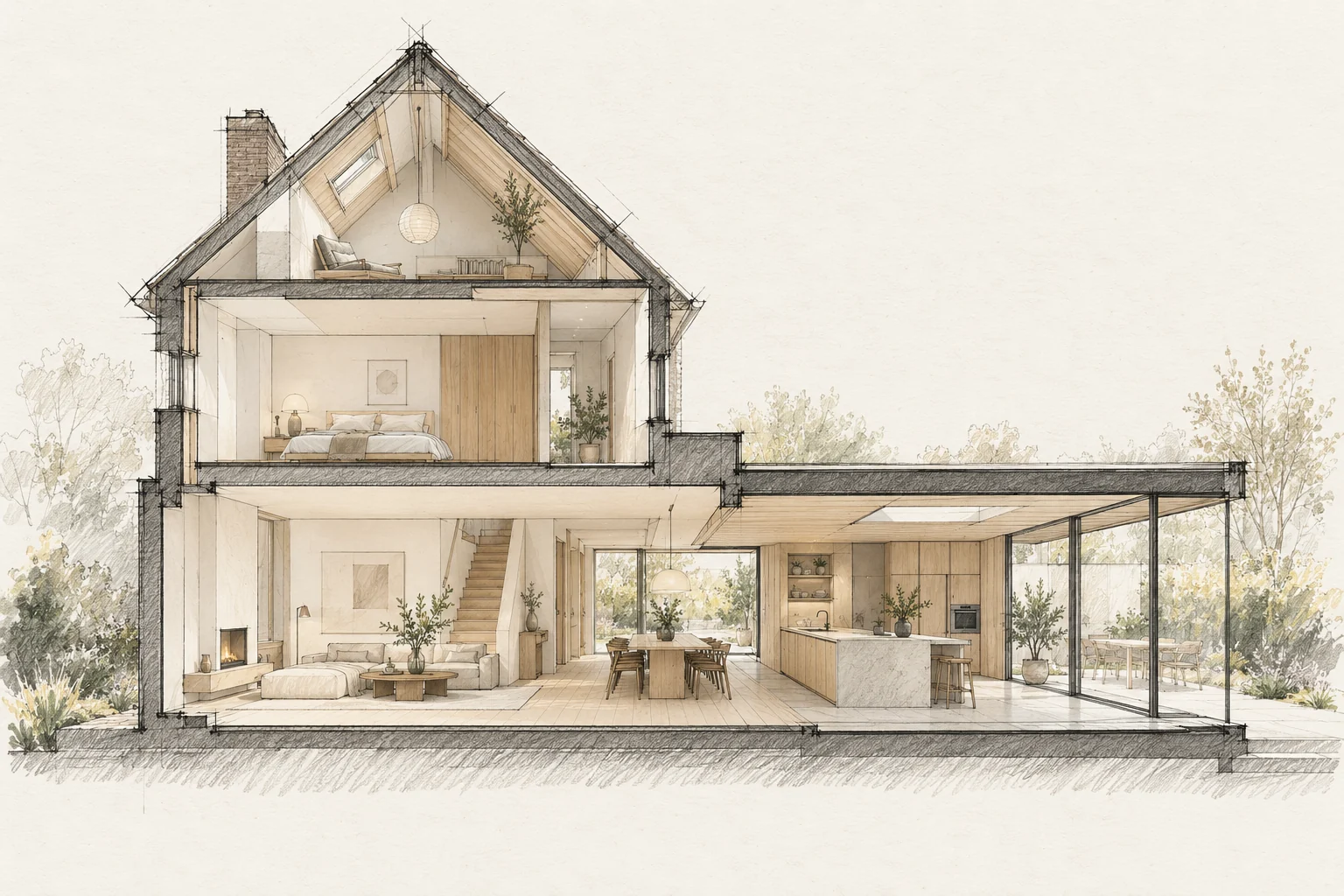
Insulation changes how heat and air move through a home. Ventilation should be part of the same plan.
Which trade-off matters?
More glazing does not automatically make a better room. Compare continuous glass with a combination of glazed and solid wall areas so views, furniture and shelter each have a place.
Record the starting point
Note draughts, condensation, moisture and stuffiness. Identify existing ventilation and how it is used.
Consider the relationships
New windows and airtightness measures can reduce uncontrolled air exchange. Review intended supply, transfer and extraction rather than relying on assumptions.
Allow for later maintenance
Keep controls and glazing accessible with the final furniture arrangement. Store glazing and shading instructions together, including any restrictions on cleaning products.
A situation to test your plan against
A living room overlooking the garden may also need privacy and a sheltered place to sit. Assess the view from the sofa and dining table, rather than only from the doorway. That lower eye level makes the choice tangible.
Questions for your own property
- What air routes exist?
- What changes with the work?
- Are controls and maintenance explained?
How can extensive glazing work with privacy?
Start from where you actually sit. Targeted window divisions, shelter or adjustable shading may help more than identical glazing everywhere. Assess the evening situation too.
Illustrative design situations, not evidence of completed work. Assess decisions against the actual property.